Why New Homes Often Cost Less to Insure in Oklahoma
When most people compare a new home to an older one, they look at the purchase price. That makes sense — it is the biggest number on the page. But the purchase price is only one part of what you will actually spend over the years you live there.
Homeowner’s insurance is one of those costs that shows up every single month, and for older homes in Oklahoma, it is often higher than buyers expect.
Insurance Is Based on Rebuild Cost — Not Purchase Price
This is the part that surprises most buyers. Your homeowner’s insurance premium is not calculated based on the purchase price of your home. It is based on what it would cost to completely rebuild your home from the ground up if it were destroyed tomorrow. The insurance industry calls this Replacement Cost Value, or RCV.
Square footage, construction materials, roofing type, electrical systems, plumbing, cabinetry — all of it gets priced at today’s labor and material rates. A home built in 1990 does not get rebuilt with 1990 prices. It gets rebuilt with today’s contractors, today’s lumber, and today’s labor costs.
What that means in practice is simple: two homes with the same square footage may have a similar replacement cost, regardless of what either one sold for. The used home you bought at a discount is not necessarily cheaper to rebuild. Your insurance carrier knows that, and your premium reflects it.

Why Older Homes Often Cost More to Insure
Once carriers establish the replacement cost, they look at risk factors to determine your rate. This is where age can work against older homes in a meaningful way.
Roof condition is one of the biggest factors, especially in Oklahoma. In a state where hail, wind, and severe weather are part of the insurance equation, carriers pay close attention to roof age and condition.
A new roof typically earns the best available rate tier. A roof that is 12 to 15 years old may carry a surcharge. At 20 years or older, some carriers may not write the policy at all without a roof replacement first.
A new construction home starts with a new roof on day one, which matters more in Oklahoma than many buyers realize.
Newer Systems Lower Risk
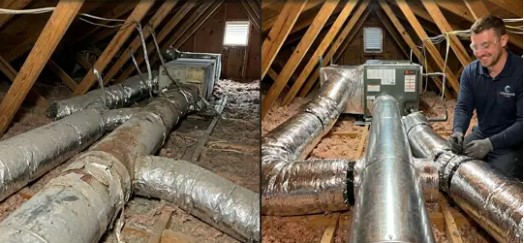
Electrical and plumbing systems are factored in as well. New homes have modern wiring, updated panels, and current-generation plumbing. Older homes may have outdated breaker boxes, older plumbing materials, aging ductwork, or other systems that signal elevated risk to underwriters — even when the home looks fine on the surface.
That does not mean every older home is a problem. It simply means insurance carriers look at age, condition, and risk differently than a buyer walking through a showing might.
Current Building Codes Matter
Building code compliance is another factor buyers rarely think about.
When an older home is damaged and needs to be repaired or rebuilt, parts of the home may need to be brought up to current code — not simply restored to the standards from the year it was originally built.
Most policies include, or offer, a code upgrade endorsement to help cover this cost. But that coverage can add to the premium and may still leave the homeowner with potential out-of-pocket exposure after a claim.
New construction already meets current code, so this is less of a concern from day one.
What the Numbers Can Look Like
The premium difference between a new home and a comparable older home is not always dramatic. In many cases, we are talking about a few hundred dollars per year — not thousands.
But a few hundred dollars a year adds up.
For example, in the Oklahoma City metro, it would not be unusual for a newer home to receive a more favorable insurance quote than a similar older home with an aging roof or outdated systems. The older home may still have a lower purchase price, but the monthly cost to own it can start creeping up through insurance, maintenance, utilities, and repairs.
Over ten years, even a modest insurance difference can become several thousand dollars. Over the life of a mortgage, it becomes a real number.
The Purchase Price Is Only the Starting Line
The broader point is this: the purchase price of a home is the starting line, not the finish line.
What you pay to own a home over time includes insurance, maintenance, energy costs, and eventual system replacements. Older homes often carry higher versions of those costs because the roof, mechanical systems, windows, insulation, and major components are already years into their life cycle.
That does not mean an older home is the wrong choice. It means the comparison deserves more than a side-by-side look at listing prices.
A realistic cost-of-ownership calculation looks at what you will spend every year — not just what you spend on closing day.
Get the Insurance Quote Before You Decide
Insurance is one of the easiest ownership costs to verify before making a decision. Most insurance agents can provide a premium estimate on a home you are considering. It usually takes a phone call, and it is worth doing before you make an offer.
If you are comparing a new home to an older home, ask for insurance estimates on both. You may find that the lower purchase price does not tell the full story.
At Two Structures Homes, we believe buyers deserve to understand the full cost of ownership — not just the number on the sales contract. A better-built home can affect comfort, energy use, maintenance, insurance, and long-term value.
If you are considering building a new home in the Oklahoma City metro, Edmond, Deer Creek, Mustang, Yukon, Arcadia, or on your own land, we would be happy to walk you through the real numbers.
Schedule your build consultation today and let’s look at the full picture — not just the purchase price.