The Home With the Lower Sales Price Isn't Always the One That Costs Less
A homeowner we're currently building for spent over $15,000 replacing the plumbing in a 25-year-old house she'd bought a few years earlier.
And she still hadn't replaced everything.
Her home inspector had cleared the house. The price had seemed reasonable. On paper, buying used had made more financial sense than building new.
Until it didn't.
Her story isn't unusual. It's actually one of the most common patterns we see—buyers who compare homes on purchase price alone, only to discover that the real cost of a home shows up later, behind the walls, under the slab, and in the systems you can't see during a showing.
The check you write at closing isn't the total cost of the home.
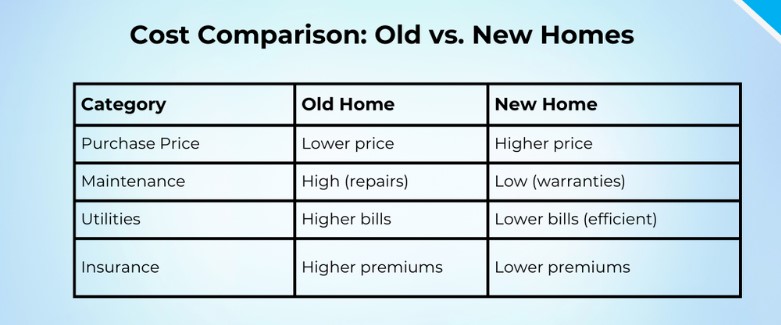
The real cost includes repairs, replacements, energy use, long-term performance, and the risk of unexpected expenses that most buyers never see coming.
Energy use is often one of the largest long-term costs of owning a home. Newer homes built with modern standards and building science can significantly reduce monthly utility expenses—something we explain in more detail in our guide on what actually makes a home comfortable.
Insurance is another cost many buyers overlook. Newer homes are often less expensive to insure because they meet current building standards and carry lower risk—something we explain in detail in our guide on why new homes cost less to insure.
The Cost Nobody Budgets For
Most buyers plan for maintenance. They know they'll need to clean gutters, service the HVAC, and fix the occasional leaky faucet.
That's not what gets expensive.
Replacement is what gets expensive.
Major systems in older homes don't just wear down—they fail. And when they do, the bills look nothing like routine maintenance.
Here's what that actually looks like in real numbers:
HVAC replacement for a 2,000 sq ft home runs around $8,500 for standard equipment—before factoring in ductwork modifications, which can push costs significantly higher. Many buyers inherit an HVAC system that's already near the end of its lifespan without knowing it.
Under-slab plumbing failures are particularly common in homes built in the 1980s, which often used polybutylene piping—a material now known to deteriorate over time. When it fails, repairs involve cutting into the slab, and total costs can climb from several thousand dollars into the tens of thousands. Our homeowner's $15,000 bill was on the lower end of what we've seen.
Foundation movement is a real concern in Oklahoma, where soil conditions put older pier-on-grade foundations at higher risk over time. The resulting structural repairs, interior cracking, and long-term performance issues are not small-ticket items.
Window system failure is quietly one of the most expensive surprises in older homes. When seals fail or aging systems need full replacement, costs can reach into the tens of thousands of dollars—an expense almost no buyer anticipates when they're touring a home.
Why a Home Inspection Won't Protect You From This
Here's something most buyers don't fully understand until it's too late: a home inspection is not a guarantee.
Inspectors can only evaluate what's visible. They cannot open walls, see behind brick, identify hidden water damage, or detect improper installation buried inside the structure.
A forensic engineer we work with regularly has noted that over 90% of the structural and water-related problems he encounters in homes trace back to improper window installation. That's not something you notice during a showing. It's not something a standard inspection typically catches. But it's one of the most common sources of long-term, expensive damage—damage that often doesn't surface until years after closing.
The inspection is a useful tool. It's just not the safety net most buyers believe it to be.
What "Building New" Actually Resets
When you build or buy new, you're not simply getting a newer version of the same thing. You're resetting the risk clock entirely.
Every major system starts at day one:
- A new HVAC system with its full lifespan ahead
- New plumbing without aging or failing materials
- A foundation engineered for long-term performance
- Windows installed with proper flashing, Tyvek wrap, and sill pan detailing—the kind of installation that prevents the failures that show up a decade later
At Two Structures Homes, we don't build to minimum code standards. We build specifically to reduce the long-term failure points that turn into expensive surprises for homeowners. Because the most costly problems in homes aren't the ones you can see—they're the ones concealed inside the structure you're trusting to protect your family.
A Warranty That's Actually Worth Something
Most builders offer a warranty. Fewer offer one that holds up when something goes wrong.
A properly structured 1-2-10 warranty provides:
- 1 year of workmanship coverage
- 2 years of systems coverage—plumbing, electrical, HVAC
- 10 years of structural coverage backed by insurance
That last element matters more than most buyers realize. Insurance-backed structural coverage isn't just a builder's promise—it's protection that exists independent of the builder. If something goes wrong years from now, you're not just hoping someone picks up the phone.
That's peace of mind with teeth.
The Honest Comparison
If you're weighing a new home against an existing one, the comparison deserves more than a price-per-square-foot calculation.
Ask yourself:
- How old are the major systems, and what will they cost to replace?
- Is there deferred maintenance that didn't show up in the inspection?
- What's the foundation type, and how has it performed in this soil?
- Were the windows installed correctly—and how would you know if they weren't?
The homes that cost less over time aren't always the ones with the lowest purchase price. They're the ones where the systems are new, the installation is done right, and the warranty is real.
That's the calculation worth making.
Two Structures Homes builds custom homes in Oklahoma City and the surrounding metro. If you're comparing new vs used, we’ll walk you through the real numbers—what it costs today and what it costs over time.